| Port21.pl
Magazyn Wodniaków english the life of VASA Autor: Marta Kolasinska 08.11.2004
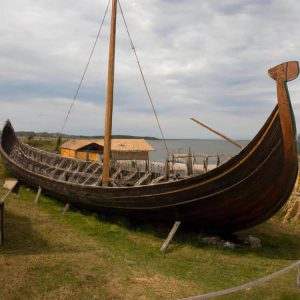
On 10th August 1628 in Stockholm, a warship ordered by king Gustav II Adolph was launched. VASA, because her we're talking about, was to be the greatest of all existing ships. A thousand of carefully chosen oaks were used for the construction; the hull was covered in hundreds of sculptures covered with gold. 64 cannons were placed onboard, including 48 of 24-pounders. Thousands of the Stockholmers gathered on the
When he learned about the tragedy, King of Sweden wanted the responsible punished. Just a few hours after the catastrophe, captain Hansson was being questioned by the Council and was imprisoned. Hansson was positive, that all of the cannons were properly secured, and he is not to be blamed for the loss of the ship. He admitted a light breeze made the ship capsize, as she was unstable although all the required ballast was onboard. He exclaimed the project was bad, and the main builder, Henrik Hybertsson, was responsible for the tragedy. The crew confirmed his evidence - no mistake was made during the manoeuvres, cannons were secured properly, so there was no way they could have moved. The mistake was in the construction.
Three days after the sinking, an Englishman, Ian Bulmer, acquired the exclusive right to lift the ship. However, neither he nor any others were able to lift a cannon. VASA's treasures remained unreachable until 1660, when Swedish Albrekt von Treileben and German Andreas Peckell took the lead. They used a diving bell, which allowed the diver to stay under water for half an hour. The work plan included taking the cannons out of the ship and lifting them to the surface (each cannon weighted around 1 tone). This way, more than 50 cannons were raised from VASA in 1664-65.
It was not easy to plan how to lift the ship. Never has such a huge and old ship had been lifted. There were lots of ideas - one of the methods was to put lots of ping-pong balls in the ship and freezing it, what would make it float. A more conventional way was chosen. Steel ropes were to be put under the hull, and attached to pontoons filled with water. As the water will be pumped out, the pontoons will start to float and lift VASA from the bottom.
On 24th April 1961 after 333 years lying on the sea bottom, VASA came to surface. She was examined and preserved. After covering her with a plastic foil, the whole hull was sprinkled with water- if it dried quickly it would fall apart. Water was pumped out of the interior and on its own keel the ship sailed to the dry dock. There the mud was removed form the lower deck and preservation began. The wooden parts were sprinkled with PEG (polyethylene glycol), which gets into the wood, and removes the water. This way they stopped the wood from shrinking and breaking, this chemical replaced water that was in the wood. Each kilogram of wood contained 1.5 kg of water- from the whole construction of the hull 580 tones were removed. Sculptures and smaller pieces were placed in bath tubes filled with PEG. The conservation took 17 years. In the interior of the hull many treasures were found: 4000 coins, cannons, armours, crewmembers' private things, kitchen utensils - more than 26000 artefacts, which has given us knowledge about the old times, people, customs and handcraft. Even today, the ship is placed in a special museum, which provides optimal environment. The humidity must be 60% and temperature exactly 20°C, the level of light cannot exceed 50 luxes. VASA is probably the biggest puzzle of the world - a team of scientists and carpenters had to put together more than 13 500 loose parts, to make VASA look as she does today. It is worth visiting the website of the VASA MUSEUM in Stockholm, and see the photos of the ship:
Artykuł pochodzi z Port21.pl - Magazyn Wodniaków http://www.port21.pl redakcja@port21.pl Design by: www.meyes.pl
|